Start with what you are losing
In that order, always. Replacing fixtures in a house with a running toilet and a slab leak is like insulating a house with the windows open — worth doing, but not first.
The running toilet
By a distance the biggest single waster in a typical home, and the one people live with for months because it is only intermittently audible. A flapper is a few dollars. Put a little food colouring in the cistern, wait twenty minutes without flushing, and if colour appears in the bowl it is leaking.
The meter test
Turn off every fixture and appliance, then watch the meter's low-flow indicator for ten minutes. If it moves at all, you are losing water somewhere. It costs nothing and it is the most reliable diagnostic on this page.
Hidden and slab leaks
A warm patch on the floor, a musty smell, a bill that has climbed for no reason. Acoustic and thermal detection finds these before anybody opens a wall, and a leak running continuously is far more expensive than the survey.
Dripping taps and worn stops
Individually trivial, collectively significant, and both are cheap fixes. A cartridge on a decent faucet is a fraction of the water it wastes in a year.
Irrigation and outside taps
A split sillcock or a leaking hose bib can run unnoticed for a whole season because it drains outside where nobody looks.
Then the fixtures
What is genuinely worth replacing
Toilets before anything else
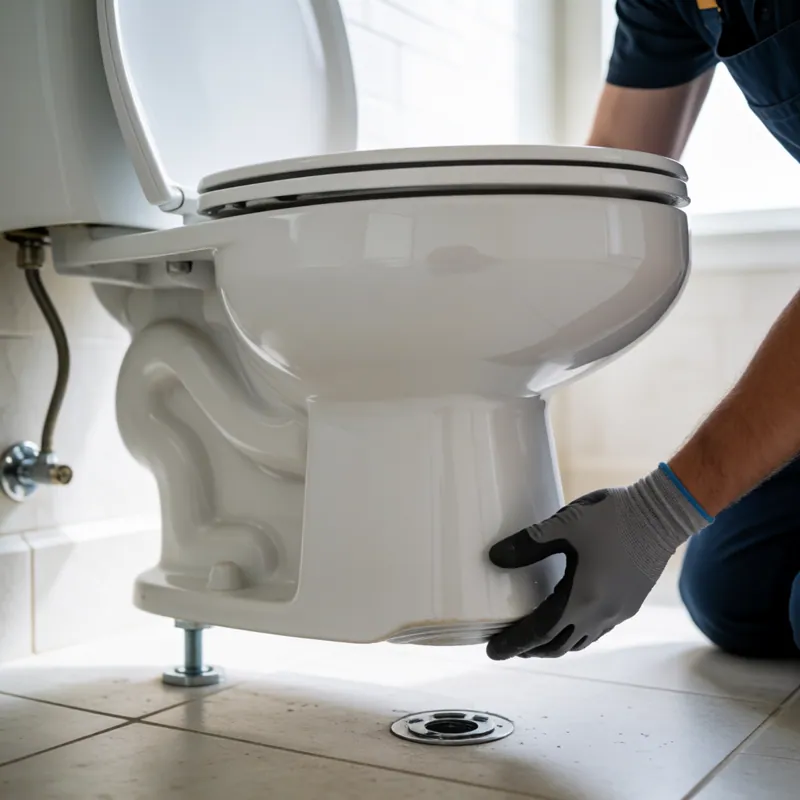
A pre-1994 toilet uses several times what a modern one does, and toilets are the largest single use of water in a home. This is the replacement with the shortest payback by a wide margin.
Aerators and shower heads
The cheapest intervention there is. A good low-flow shower head is genuinely indistinguishable in use and costs less than a single month of the difference.
The water heater, on running cost
A heat pump water heater costs a fraction of a standard electric tank to run. That is energy rather than water, but it is the same bill and the same conversation.
Where rebate and incentive money usually comes from
Amounts, thresholds and eligibility change from year to year, so we confirm what your specific project qualifies for at quote time rather than quoting a headline number at you.
Federal tax credits
A percentage of qualifying equipment and installation cost for efficient water heaters, notably heat pump units, claimed on your return and subject to annual caps and efficiency thresholds. We give you the documentation your preparer will ask for.
State efficiency programmes
New York State runs incentive programmes for heat pump water heaters and whole-home efficiency work. Some are paid to the contractor and deducted from your invoice, so you never have to front the money.
Utility incentives
The local gas and electric utilities run their own programmes and change them more often than the state does. This is the category most often missed, because it needs somebody to check what is live this month.
Water conservation programmes
Municipal programmes have at various times contributed towards replacing old high-volume toilets and, for multi-family buildings, towards whole-building fixture upgrades. Worth asking about before a large fixture replacement.
Programme financing
Financing tied to qualifying efficiency work, which for a project of this size frequently beats a home equity line. We show the monthly figure on the quote next to the total so you can compare like with like.
This is a demonstration site. The programmes described here are illustrative. Real incentive amounts, eligibility rules and deadlines change frequently and vary by equipment, income and location — check current programme documentation before relying on any figure.
Worth knowing
Pressure is the quiet destroyer
High incoming water pressure shortens the life of every fixture, valve, connector and appliance in the building, causes water hammer, and makes every leak worse than it needs to be. A great many Queens buildings run higher than they should and nobody has ever measured it.
A pressure gauge on a hose bib costs almost nothing and tells you in thirty seconds. Where the reading is high, a pressure-reducing valve is one of the highest-value pieces of plumbing you can buy — and it pays for itself in fixtures that stop failing.
- Pressure measured as standard on every service-agreement inspection.
- Pressure-reducing valve fitted from $650, including an expansion tank where the system becomes closed.
- Fixture and shutoff audit, with everything labelled, included on Total Care.
Ask before you buy
Find out what your project qualifies for
Tell us the building and what you are considering and we will come back with the gross price, the net price and which programmes are in play.