Water where it should not be? The emergency line is answered by a person, 24 hours a day, every day of the year — and we will talk you to your shutoff before anybody gets in a van. Call 000-000-0000
There is a version of this job that takes ninety minutes: disconnect, drag out, drag in, reconnect, leave. It is cheap and it is what a great many replacements actually are. It also skips the drain pan, reuses a corroded shutoff, ignores that the vent connector has been drooping for a decade, and leaves a thermal expansion problem that will shorten the new tank's life.
We do the other version. It takes half a day, it costs a few hundred dollars more, and the tank that comes out of it is still working when the cheap one would have been replaced twice.
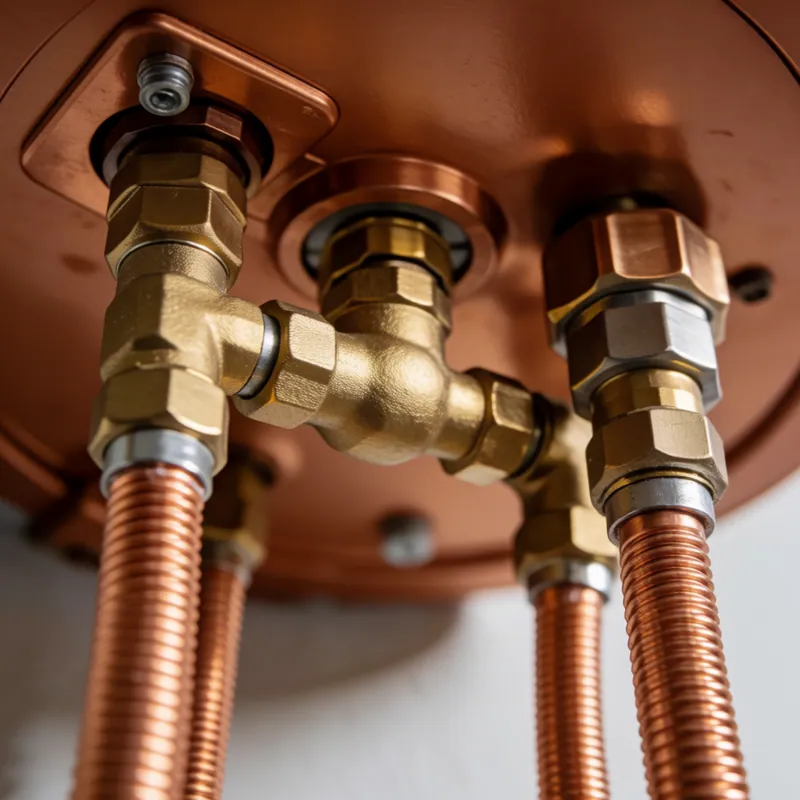
What a proper installation includes
Every one of these is on the written quote before you agree to anything.
Sizing to the household, not to the old tank
Number of bathrooms, peak demand, recovery rate. A family of five and a couple do not want the same appliance, and the old one may have been wrong all along.
New shutoff and flexible connectors
The valve that has been seized open for fifteen years is not saved to keep the price down. Neither are the connectors.
Venting done correctly
Gas units get the vent connector checked end to end for slope, support, connection and draft, with a draft test at the end. This is a safety item and it is not optional.
Thermal expansion control
Where the service has a check valve or a pressure reducer, the system is closed and needs an expansion tank. Without it the relief valve weeps and the tank works against itself.
A drain pan and a route for the water
Any tank over finished space gets a pan piped to a drain. Water heaters do not fail politely.
Seismic and support details
Strapping and a level, stable base. A tank that is not sitting properly stresses every connection on it.
Removal, recycling and clean-up
The old unit leaves with us and goes for scrap. It does not sit in your side alley for a fortnight.
Commissioning
Filled, purged, fired, temperature set to a sensible 120°F, relief valve tested, and the shutoffs pointed out to you before we leave.
Choosing the right unit
Four questions decide almost every water heater in this neighbourhood.
Gas or electric
Usually whatever the house already has, because changing fuel means new gas piping or a new circuit. Where there is a genuine choice we will do the running-cost arithmetic with you.
Tank size
40 gallons suits most one- and two-bathroom homes. 50 to 75 for larger households or a soaking tub. Bigger is not automatically better — a tank you never empty is a tank you are keeping hot for nothing.
Recovery rate
How fast it makes more hot water. Often more important than raw capacity for a family with a morning rush, and the reason a smaller high-recovery unit sometimes beats a bigger slow one.
Tank, tankless or heat pump
Tankless suits a household with space constraints and steady demand. Heat pump water heaters are dramatically cheaper to run and are where the rebate money is, but they want a reasonably warm basement with some volume around them.
How to tell yours is near the end
A tank that is about to fail usually announces it. Replacing on your schedule costs less and floods nothing.
Age past ten years
In this water, eight to twelve years is normal for a standard tank. Past ten, plan rather than wait.
Rust-coloured hot water
Especially if only the hot side does it. That is the inside of your tank arriving at the tap.
Rumbling or popping
Sediment on the bottom, boiling under the layer. It insulates the burner from the water and cooks the tank from below.
Damp or staining at the base
A leak from a fitting is repairable. A leak from the tank body is the end — the shell has corroded through and it will not get better.
Relief valve discharging
Sometimes a failed valve, sometimes thermal expansion, sometimes genuine overpressure. Always worth a look the same week.
Not enough hot water any more
If nothing about the household has changed, the usable capacity has shrunk — usually sediment, sometimes a failed lower element.
If you smell gas, leave the building and call your gas utility's emergency line from outside — do not operate switches on your way out. Never stand in water that has reached an outlet, an appliance or an electrical panel; cut the power only if you can do it safely from dry ground, otherwise leave and call the utility. General guidance on this page is not a substitute for a licensed plumber looking at your own building.
Questions
Water Heater Installation — the questions we are asked most
How much does water heater installation cost in Woodside, NY?
A 40-gallon gas tank installed starts at $1,850 and a 50-gallon at $2,150, including the new unit, a new shutoff and connectors, the venting check, removal of the old tank and commissioning. Electric tanks start at $1,650 and heat pump units at $3,400. The quote is flat and given before we start.
Can you replace a water heater the same day?
Usually yes, if you call in the morning and a standard size is on the shelf, which the common ones are. Emergency same-day replacement carries a $250 surcharge outside normal hours. A leaking tank is treated as urgent — shut its cold inlet valve and call.
How long does a water heater last?
Eight to twelve years for a standard tank in this water, longer if the anode rod has been replaced and the tank flushed annually. Tankless units commonly run fifteen to twenty years with annual descaling.
What size water heater do I need?
Most one- and two-bathroom Queens homes are well served by 40 gallons. Larger households, a soaking tub or a morning rush of three showers usually want 50 to 75, or a unit with a higher recovery rate. We size on peak demand rather than on the number on the old tank.
Is a heat pump water heater worth it?
If your basement has reasonable volume and does not get very cold, the running-cost saving is substantial and there is frequently rebate money available. They are slower to recover and they cool and dehumidify the space around them, which is a bonus in a Queens basement and a nuisance in a tight closet.
Do I need an expansion tank?
If there is a check valve, a backflow preventer or a pressure-reducing valve on your water service, the system is closed and you do. Without one, heated water has nowhere to expand into, the relief valve weeps, and everything on the system is stressed every time the burner runs.
Do you take the old water heater away?
Yes, always, and it is included in the price. It goes for scrap metal recycling rather than to the kerb.
Related
Often needed alongside this
Water Heaters & Water
Water Heater Repair
No hot water, not enough of it, or a noise you have started to worry about — diagnosed the same day, and repaired if repair is honest.
Read more
Water Heaters & Water
Tankless Water Heaters
Endless hot water and a reclaimed basement corner — installed with the gas, venting and descaling valves done properly.
Read more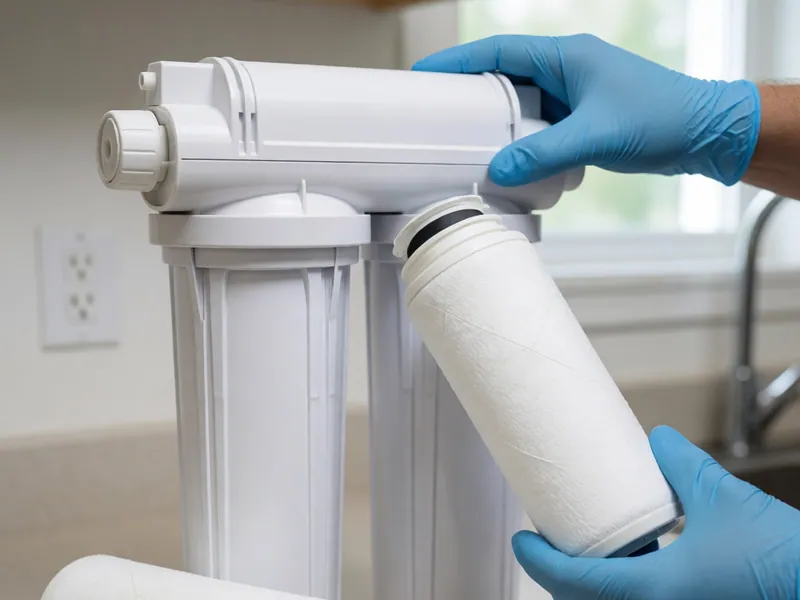
Water Heaters & Water
Filtration & Softeners
Whole-house filtration, softening and under-sink drinking water — specified after a test, not after a sales pitch.
Read moreSame-day service in most cases
Book a plumber, or call the 24-hour line
Tell us what the water is doing and we will tell you honestly whether it needs somebody tonight or whether it will keep until the morning. Diagnostics are $89 and credited in full against any repair you approve.