Water where it should not be? The emergency line is answered by a person, 24 hours a day, every day of the year — and we will talk you to your shutoff before anybody gets in a van. Call 000-000-0000
Woodside houses tend to be piped in one of three things: galvanised steel that is now eighty years old and closing from the inside, copper from the middle of the last century that has started to pinhole, or a mixture of both plus whatever a previous owner added. All three eventually reach the same place.
A repipe is a bigger job than a repair, and it should be planned rather than triggered by an emergency. Done properly it is phased so the house has water every night, the access holes are few and in sensible places, and the result is thirty years of not thinking about it.
When repiping is the right answer
It is not always. These are the honest triggers.
Repeat pinhole leaks
Two in a year, or three in two years, on the same era of pipe. The pipe is telling you what the rest of it is going to do.
Galvanised supply pipe
It closes from the inside with corrosion. Poor pressure at the top floor, rusty water on first draw, and it does not improve.
Discoloured water on the hot side
Which is usually the water heater, but on the cold side and at every tap it points at the pipe.
Pressure that has fallen over years
Especially if it is worse at the fixtures furthest from the service.
A renovation that opens the walls anyway
The cheapest repipe you will ever buy is the one done while the wall is already open.
A failing water service line
The run from the street to the house. Its own job, but frequently found during the same survey.
Copper or PEX
Both are good. Anyone who tells you one is simply better is not describing your house.
Copper — long life and proven
Rigid, resists heat, and a well-made copper system lasts decades. More labour, more joints, and it is the material most people picture when they think of good plumbing.
Copper — the caveats
It is the material that pinholes in aggressive water, and it costs more. In an exposed basement run it is also simply nicer to look at, which matters more than people admit.
PEX — fewer joints, less demolition
Flexible, so it threads through existing structure with far less opening up. Home-run manifold layouts put a shutoff for every fixture in one place.
PEX — the caveats
It must be kept away from UV and from direct high heat, and it needs proper support and expansion allowance. Fittings and workmanship matter more than the material does.
What we usually recommend
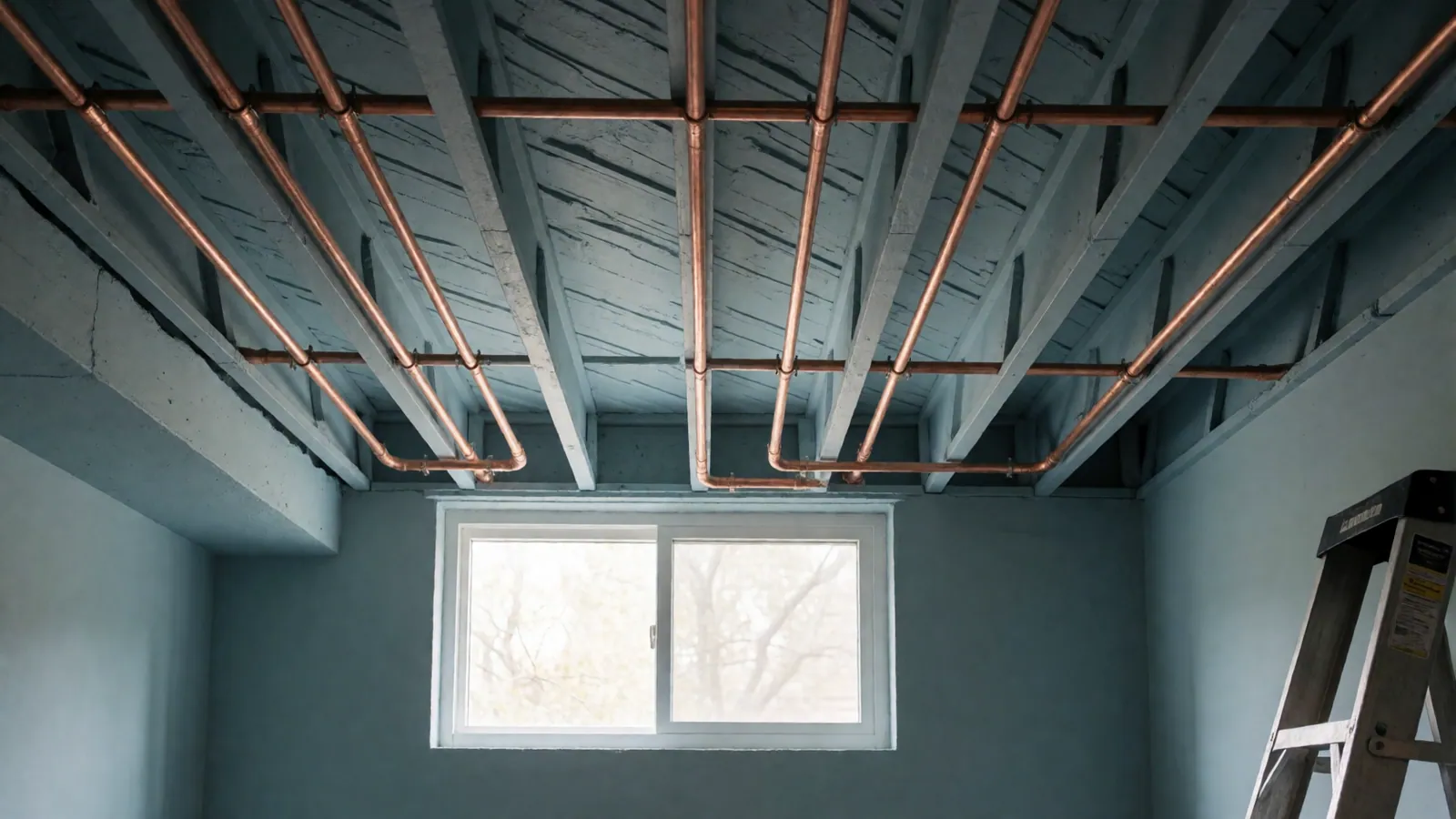
PEX for the concealed distribution through walls and floors, copper for exposed basement runs, manifolds and anything near a heat source. It is the combination that gives you the fewest holes in your plaster and the best-looking mechanical room.
How a repipe actually runs
The disruption is the thing people fear, so it is the thing we plan hardest.
Survey and drawing first
Every fixture, every run, every access point, drawn before anything is cut. You see the plan and where the holes will be.
Phased so the house keeps water
We work in sections and reconnect at the end of each day. In a typical house you are never without water overnight.
Access, not demolition
Neat cut-outs in agreed places, mostly in closets, basements and low on walls. A whole-house repipe in a two-storey house is typically a dozen or so patches, not gutted rooms.
New shutoffs everywhere
A working stop at every fixture, and a labelled main. This is half the value of a repipe and it is the half nobody advertises.
Pressure tested and inspected
The new system is pressure tested before anything is closed, and the permit is inspected and closed out.
Made good
Patches taped and finished ready for paint. We are honest about where a finishing trade does it better than we would.
Questions
Repiping & Water Lines — the questions we are asked most
How much does it cost to repipe a house in Woodside, NY?
A typical single-family Queens house with two bathrooms runs from $11,500, and one bathroom from $7,500, including the permit, pressure test and patching ready for paint. A two-family house starts around $17,500. Fixture count and access drive the price far more than floor area, so we quote after a survey.
How long does a whole-house repipe take?
Three to five working days for a typical single-family house, plus patching. We phase it so the house has water every night — you are not camping in your own home for a week.
Should I use copper or PEX?
Usually both. PEX threads through existing walls and floors with far less demolition, so it is the sensible choice for concealed distribution. Copper is better for exposed basement runs, manifolds and anywhere near heat. That combination gives you the fewest patches and the best-looking mechanical room.
Do I have to move out during a repipe?
No, in almost every case. We work in sections and reconnect at the end of each day, so water is on overnight. Expect noise and dust during working hours and a few days of patched walls afterwards.
How do I know if my pipes need replacing?
Repeat pinhole leaks are the clearest signal — two in a year on the same era of pipe means the rest of it is heading the same way. Galvanised supply pipe with falling pressure and rusty first-draw water is the other classic case. A single leak in otherwise healthy pipe is a repair, not a repipe, and we will say so.
Will you have to open all my walls?
No. A whole-house repipe in a two-storey Queens house is typically a dozen or so neat cut-outs in agreed places — closets, basements, low on walls — rather than gutted rooms. We draw the access plan before anything is cut and you see exactly where the holes will be.
Do I need a permit to repipe?
Yes for the work that alters the plumbing system, and it is filed by a licensed master plumber and closed out with an inspection. It is in the quote rather than an extra, and a properly closed permit is worth real money when you sell.
Related
Often needed alongside this

Pipes & Fixtures
Leak Detection & Repair
Hidden leaks found with acoustic and thermal equipment before anybody opens a wall — then repaired and the wall closed.
Read more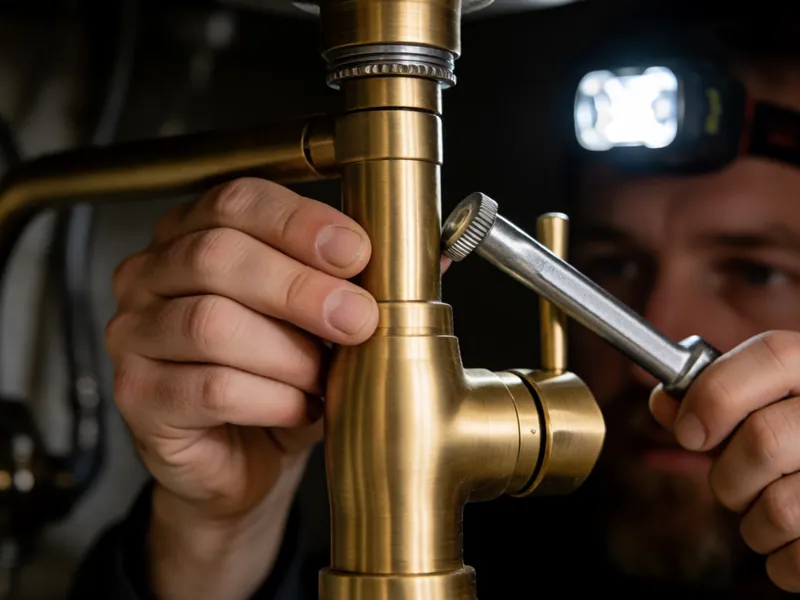
Pipes & Fixtures
Faucets, Sinks & Toilets
Fixtures repaired or replaced properly — including the seized shutoff behind them that nobody quotes for.
Read more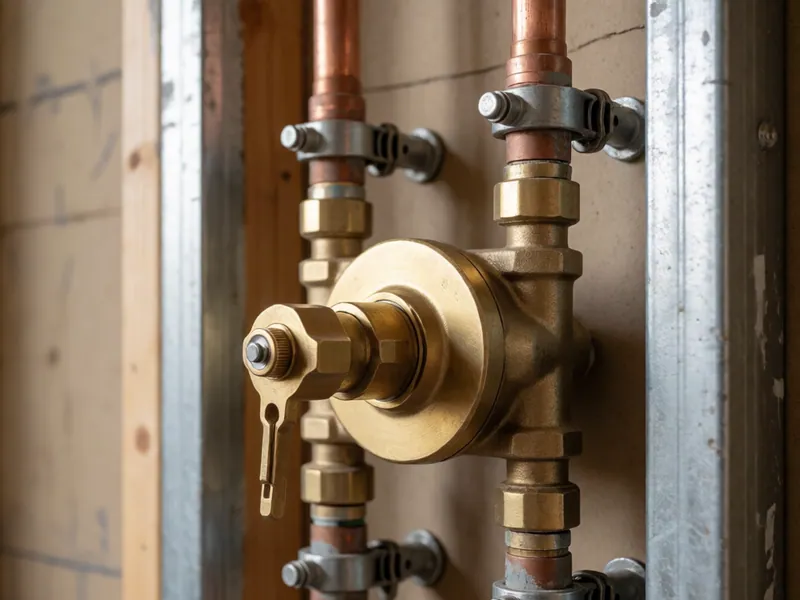
Pipes & Fixtures
Remodel Plumbing
The plumbing half of a bathroom or kitchen renovation — rough-in, relocation, venting and permits, coordinated with your trades.
Read moreSame-day service in most cases
Book a plumber, or call the 24-hour line
Tell us what the water is doing and we will tell you honestly whether it needs somebody tonight or whether it will keep until the morning. Diagnostics are $89 and credited in full against any repair you approve.